Worlds you can play right now
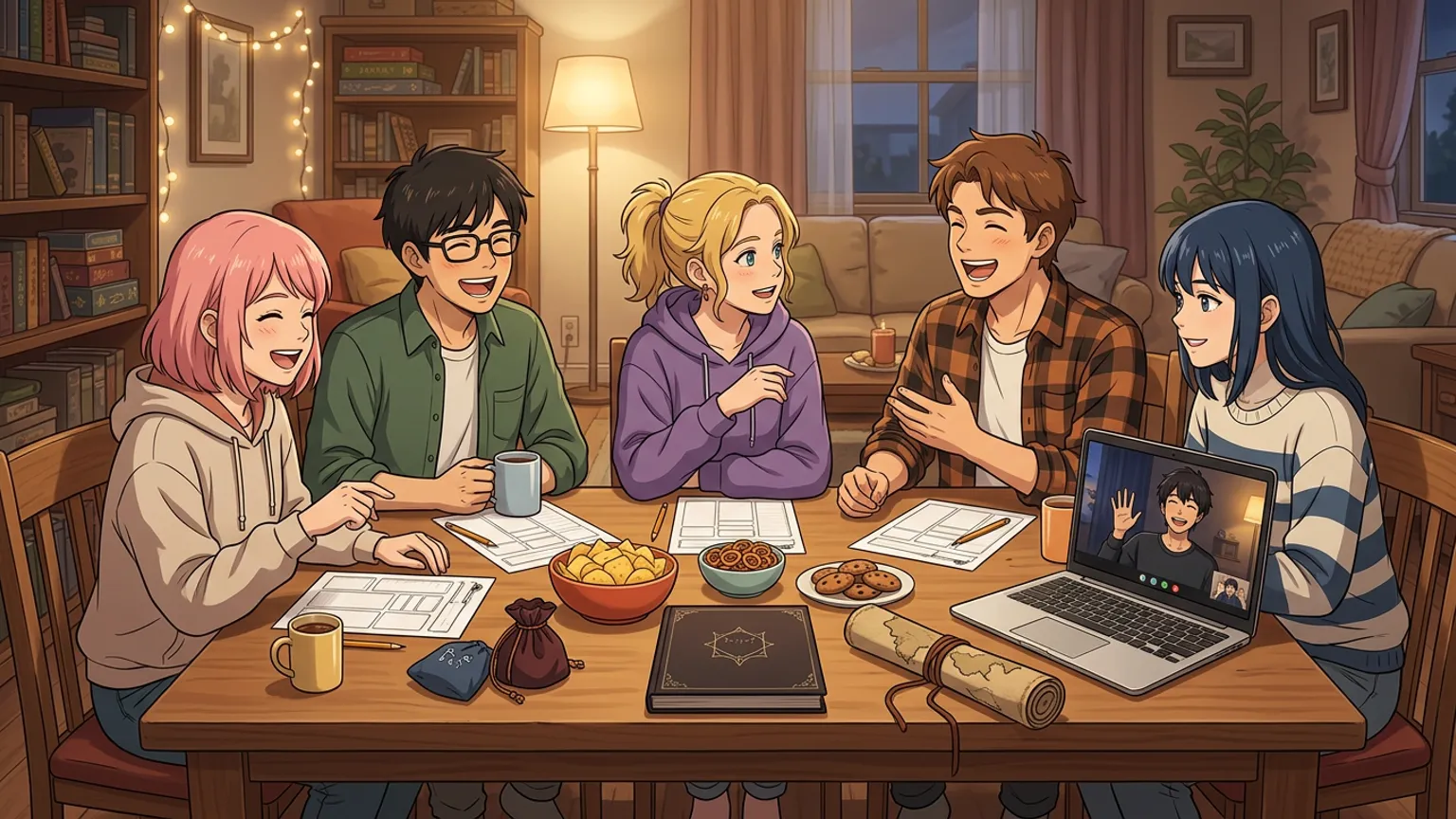
Session zero is a meeting before a tabletop campaign starts, where the group agrees on tone, house rules, characters, schedule and boundaries before anyone rolls initiative. It is sometimes written "session 0".
It sounds like admin, and it is the single cheapest way to avoid the classic campaign-killers: one player wants a gritty horror game while another wants jokes, a character who has no reason to join the party, a scene that goes somewhere someone hates. Below is what to cover, a copy-paste questionnaire, the common safety tools, and how to adapt session zero for online, solo and AI play.
What is session zero, and where did it come from?
The name is a joke that stuck: it is the session before session one. Players had long been doing a pitch-and-characters night before a campaign; the term spread through actual-play shows and forums in the 2010s. D&D made it official in Tasha's Cauldron of Everything (2020), and the 2024 Dungeon Master's Guide includes session-zero guidance for new DMs.
A session zero usually takes one evening. Some tables play a short scene at the end to test the characters together; others spend the whole time talking. Either works, as long as everyone leaves knowing what kind of game they signed up for.
Session zero checklist: what to cover
| Topic | What to agree on |
|---|---|
| Campaign pitch and tone | Setting, genre, heroic or grim, comedy level, how much combat vs. roleplay vs. exploration |
| House rules | Edition, optional rules, homebrew, crits, flanking, how strictly the DM rules |
| Character creation | Level, ability score method, allowed races, classes and sources, starting gear |
| Party ties | Why the party is together and why it stays together; one link between each PC and another |
| Schedule and logistics | How often, how long, where, what happens when someone misses a session |
| Table etiquette | Phones, snacks, spotlight sharing, rules debates (settle after the session) |
| Player expectations | What each player wants more of: fights, puzzles, drama, romance, loot, lore |
| PvP | Allowed, allowed with consent, or off; secrets between players or not |
| Character death | How lethal the game is, whether resurrection exists, what happens to a player whose PC dies |
| Safety tools and boundaries | Lines and veils, X-card or equivalent, open door, how to pause |
Session zero questions: a copy-paste questionnaire
Send this to players before the meeting (a form, a doc or a Discord post) so the session itself is about decisions, not first thoughts.
- What kind of game do you want: heroic, grim, funny, scary, political?
- What do you enjoy most: combat, exploration, roleplay, puzzles, character drama?
- What pulls you out of a game?
- Your character concept in one sentence, and one reason they would work with this party.
- One goal, one fear and one secret for your character (the secret can go to the DM only).
- Lines: topics that must never appear.
- Veils: topics that can exist but should happen off-screen.
- How do you feel about character death, PvP and romance between characters?
- What days and times work, and how often can you realistically play?
- Anything the DM should know to make the game better for you?
Session zero safety tools: lines and veils, X-card, open door
- Lines and veils: a line is a hard limit, content that never appears in the game. A veil is content that can happen, but off-screen or with a fade to black. The idea first appeared in Ron Edwards' Sex and Sorcery supplement for Sorcerer.
- X-card: a card (or an emoji in chat) anyone can tap to remove the current content, no explanation needed. It was created by John Stavropoulos.
- Open door: anyone can step away from a scene or leave the game at any time, and no one asks why.
- Script Change: rewind, pause or fast-forward a scene, borrowed from media controls (by Beau Jágr Sheldon).
- Check-ins: a quick "everyone still good?" before or during an intense scene.
Most of these are collected, free, in the TTRPG Safety Toolkit curated by Kienna Shaw and Lauren Bryant-Monk. You do not need all of them; pick two or three the whole table understands and actually uses.
Session zero for online and Discord games
- Run the questionnaire as a form or a pinned post, and share the answers anonymously where it matters (lines especially).
- Agree on the tools: which VTT or dice bot, voice or text, cameras on or off, and a backup when the VTT breaks.
- Set time zones and a fixed start time in writing; name the channel where cancellations go.
- Make a text X-card: an emoji or a keyword anyone can drop in chat, and agree that the DM moves on without discussion.
- Pin a one-page summary of everything you agreed, so new players can read it later.
Common session zero mistakes
- Skipping it because "we are all friends". Friends still want different games.
- Treating it as a rules lecture. The goal is agreement, not a reading of the house-rules doc.
- Letting the loudest player set the tone for everyone. The anonymous questionnaire fixes this.
- Making characters in isolation, then discovering on session one they have no reason to be together.
- Doing it once and never again. Revisit it after a few sessions, and whenever someone joins.
Session zero for solo and AI play (and on WorldOS)
Solo and AI games need a session zero too; it just fits in your first message. Tell the AI dungeon master:
- Tone and genre, and how dangerous the world is.
- Rules strictness: full 5e, rules-light, or story first; how dice are handled.
- Boundaries: your lines and veils, stated plainly.
- Pacing and format: reply length, how often to pause for your choice, whether to offer options.
- Your character, their goal, and where the story starts.
On WorldOS, much of this is set before you type. A world's setup and opening define the premise and cast, and worlds that let you choose who you play show a "Create your character" card. Your first message covers the rest: tone, strictness and boundaries. For a tabletop feel, install Dice (checks with your modifier added), RPG Map (travel plus gridded battle maps) and the equipment, skills and levels app with its D&D 5e preset. Rated content stays behind a viewer opt-in.
FAQ
What is session zero in D&D?
A meeting before the campaign where the players and DM agree on tone, house rules, characters, schedule and boundaries. It usually takes one evening.
What should be on a session zero checklist?
Campaign pitch and tone, house rules, character creation and party ties, schedule, table etiquette, player expectations, PvP, character death and safety tools.
What are lines and veils?
A line is content that never appears in the game. A veil is content that can happen but off-screen or with a fade to black.
Do you need a session zero for a one-shot?
A short one, yes: five minutes on tone, lines and veils, and who the characters are saves a lot of awkwardness.
How long should session zero be?
Usually two to three hours. Sending a questionnaire in advance makes it faster.
Can I do a session zero with an AI dungeon master?
Yes. Put your tone, rules strictness, boundaries and pacing in your first message, and restate them if the story drifts.
Your campaign, set up your way
Start a fantasy world on WorldOS, set the tone in your first message, and play with dice and battle maps, free every day.