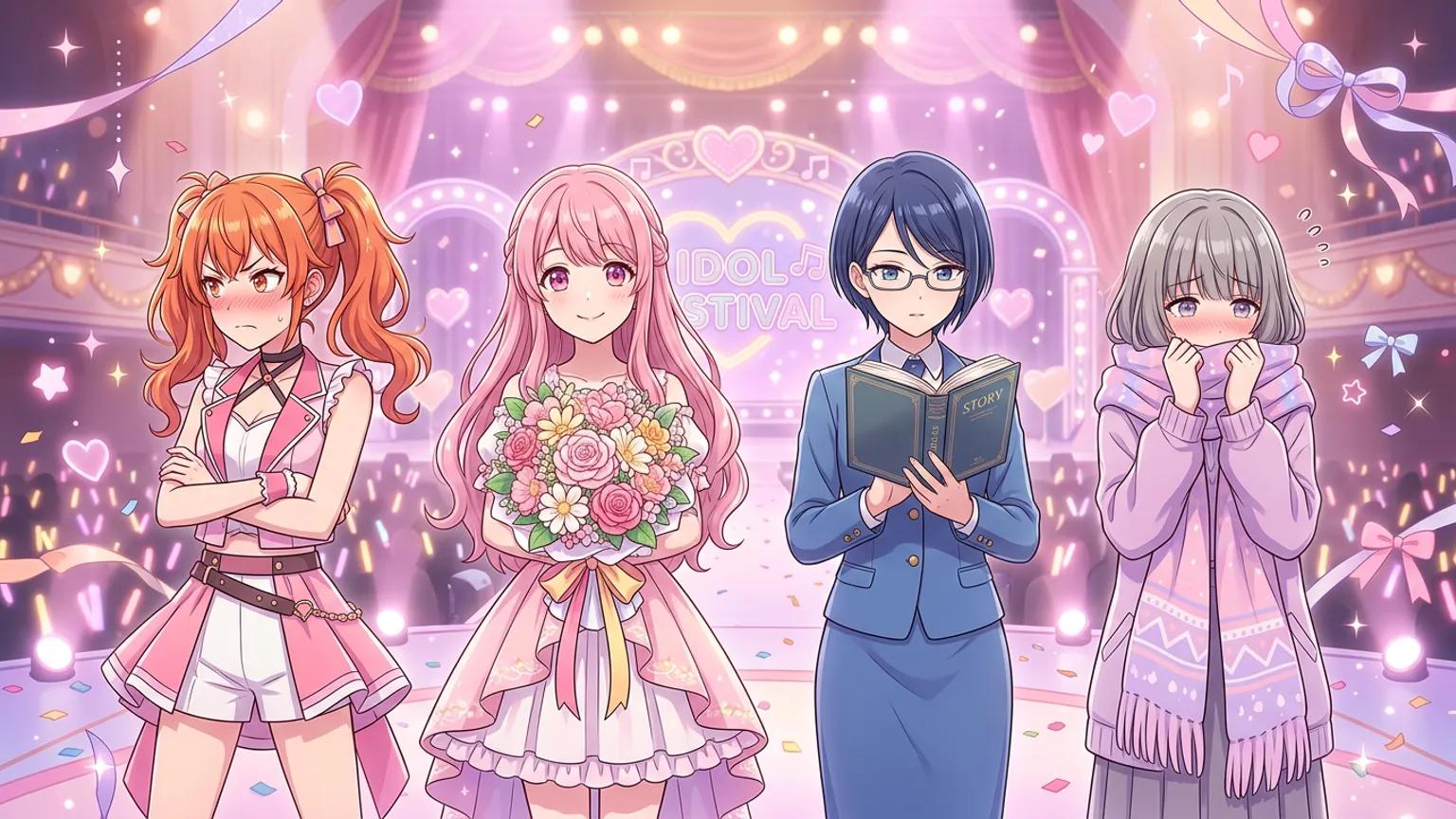
Worlds you can play right now
Dere types are anime and manga personality archetypes that describe how a character acts when they have feelings for someone; "dere" comes from deredere, Japanese for lovey-dovey. The four main dere types are tsundere (harsh on the outside, soft inside), yandere (sweet until the love turns obsessive), kuudere (cool and flat, warm in private) and dandere (shy and silent until they trust you).
Below is the full dere types list with meanings, how each type shows affection and the characters fans usually point to, then male dere types, how to spot a type, a five-question quiz, and how to write or roleplay each one with AI. Most of these labels are fan-coined, so treat them as a vocabulary, not a rulebook: plenty of great characters are two types at once.
The 4 main dere types
- Tsundere: cold, prickly or even aggressive toward the person they like, with a soft side that leaks out. The classic line is "It's not like I did it for you." Often cited: Taiga Aisaka (Toradora!), Asuka Langley Soryu (Neon Genesis Evangelion), Kurisu Makise (Steins;Gate).
- Yandere: sweet, devoted and loving, until the devotion becomes possessive, jealous and dangerous. The "yan" is from yanderu, to be sick. The textbook case is Yuno Gasai (Future Diary).
- Kuudere: calm, blunt and emotionally flat on the surface; the warmth shows in small, rare moments. Often cited: Rei Ayanami (Evangelion), Yuki Nagato (The Melancholy of Haruhi Suzumiya).
- Dandere: quiet and shy, not cold. They go silent because talking is hard, and open up once they feel safe. Often cited: Hinata Hyuga (Naruto), Shoko Komi (Komi Can't Communicate).
The fastest way to tell kuudere from dandere: a kuudere could talk and chooses not to emote; a dandere wants to talk and cannot. And the fastest way to tell tsundere from yandere: a tsundere hides affection, a yandere shows too much of it.
Dere types list and meanings (chart)
The full dere types chart. "Often cited" examples are the ones fan wikis and forums reach for most; where a type is mostly an original-character or fanfic label, we say so instead of forcing an example.
| Type | Meaning | How they show affection | Often cited examples |
|---|---|---|---|
| Tsundere | Harsh outside, soft inside | Insults, then helps anyway; denies it | Taiga (Toradora!), Asuka (Evangelion), Kurisu (Steins;Gate) |
| Yandere | Love that turns obsessive | Total devotion, jealousy, eliminating rivals | Yuno Gasai (Future Diary) |
| Kuudere | Cool, blunt, flat affect | Quiet loyalty, small rare smiles | Rei Ayanami (Evangelion), Yuki Nagato (Haruhi) |
| Dandere | Shy, silent, anxious | Opens up slowly, tiny brave gestures | Hinata (Naruto), Komi (Komi Can't Communicate) |
| Deredere | Openly sweet and cheerful | Says it, shows it, all the time | Tohru Honda (Fruits Basket) |
| Himedere | Acts like a princess | Expects to be treated as royalty, rewards devotion | Mostly a secondary trait on rich-heiress characters |
| Oujidere | Male himedere, acts like a prince | Grand gestures, dramatic chivalry | Tamaki Suoh (Ouran High School Host Club) |
| Kamidere | God complex | Declares you worthy of them | Haruhi Suzumiya, Light Yagami (Death Note) |
| Bakadere | Clumsy, airheaded | Enthusiastic, messy, trips over feelings | Common in comedies; usually a side trait |
| Undere | Says yes to everything | Agrees with whatever the crush says | Mostly a fan and OC label |
| Yangire | Snaps into violence, not always over love | Normal, then suddenly terrifying | Lucy (Elfen Lied) is a frequent pick |
| Mayadere | Dangerous enemy who falls for the hero | Switches sides for them | Esdeath (Akame ga Kill!) is a frequent pick |
| Sadodere | Loves by teasing and tormenting | Relentless teasing, flusters you on purpose | Hayase Nagatoro (Don't Toy with Me, Miss Nagatoro) |
| Bodere | Shy but violent when flustered | Hits or shoves when embarrassed | Overlaps with slapstick tsunderes |
| Hinedere | Cynical, arrogant, soft underneath | Condescends, then protects | Mostly a fan and OC label |
| Nyandere | Cat-like | Aloof, then suddenly affectionate on their terms | Common on cat-eared characters |
| Darudere | Too lazy to bother | Low effort, but shows up when it counts | Houtarou Oreki (Hyouka) is a frequent pick |
| Thugdere | Tough delinquent, sweet to one person | Scary to everyone except you | Shoujo delinquent love interests |
| Dorodere | Sweet outside, dark and bitter inside | Smiles while resenting | Mostly a fan and OC label |
| Shundere | Sad, melancholic | Leans on you, affection tinged with gloom | Mostly a fan and OC label |
| Kanedere | Loves money (and people who have it) | Affection tracks your wallet | Mostly a fan and OC label |
| Kekkondere | Wants to marry you, immediately | Talks weddings on the first date | Common in harem comedies |
| Goudere | Goes overboard for the crush | Extreme, over-the-top favors | Mostly a fan and OC label |
| Byoukidere | Sickly or frail | Gentle, grateful, fragile | Mostly a fan and OC label |
Male dere types
Every dere type works for any gender; the vocabulary just grew up around female characters in romance anime, so male examples are less standardized. The ones fans reach for most:
- Male tsundere: Inuyasha (Inuyasha) and Kyo Sohma (Fruits Basket) are the go-to picks. Loud, defensive, loyal.
- Male kuudere: Levi Ackerman (Attack on Titan) is often filed here, though fans argue he is more stoic than romantic. Cold delivery, quiet care.
- Male kamidere: Light Yagami (Death Note), the god complex in its purest form (romance optional).
- Male oujidere: Tamaki Suoh (Ouran High School Host Club), a prince who knows it.
- Male yandere: rarer in mainstream anime and far more common in otome games and vampire romances, where the possessive love interest is its own sub-genre.
- Male thugdere and darudere: the delinquent with a soft spot and the lazy genius who only tries for you are shoujo staples.
How to spot a dere type
Ask three questions about how the character treats the person they like:
- What happens when they are complimented? Tsundere denies it angrily, dandere freezes, kuudere says "I see," deredere beams, kamidere agrees.
- What happens when a rival shows up? Tsundere sulks, yandere escalates, kuudere barely reacts (then acts), sadodere teases harder.
- How do they help? Tsundere helps while insulting you, dandere helps silently, kuudere helps efficiently, himedere expects you to help them.
If two answers point at different types, the character is a hybrid, and hybrids are usually the best-written ones. Kurisu Makise, for example, reads as a tsundere with a kuudere's composure.
Dere types quiz: which one are you?
Five questions, no sign-up. Pick the letter that fits you best and count them at the end.
- 1. Your crush compliments your outfit. You: (A) "Whatever, I just threw it on." (B) "Thanks. I wore it for you. Only you." (C) "Thank you." and nothing else. (D) Turn red and look at the floor.
- 2. They text someone else all night. You: (A) Pretend not to care, then send one sharp message. (B) Want to know exactly who it was. (C) Notice and say nothing. (D) Worry quietly that you did something wrong.
- 3. Your idea of a confession: (A) Blurting it out mid-argument. (B) A long letter about forever. (C) A single sentence, stated plainly. (D) A note you rewrote ten times, then never sent.
- 4. Friends describe you as: (A) Hot-headed but loyal. (B) Intensely devoted. (C) Calm and hard to read. (D) Sweet once they get to know you.
- 5. When you care about someone, you: (A) Help and then deny it. (B) Put them above everything. (C) Show up, reliably, without fuss. (D) Remember every small thing they said.
Mostly A: tsundere. Mostly B: yandere (in the fun, fictional sense). Mostly C: kuudere. Mostly D: dandere. A tie is a hybrid, which, as above, is the best kind.
How to write or roleplay each dere type with AI
AI characters drift toward generic friendliness, so a dere personality needs behavior, not just a label. Writing "tsundere" alone gives you a character who says "b-baka" and nothing else. Give the AI rules it can act on. Some lines that work in a character description:
- Tsundere: "Answers kindness with a jab, then quietly does the helpful thing anyway. Never admits caring out loud; changes the subject when caught. Softens only in rare, private moments."
- Yandere: "Warm, attentive and devoted to the user; remembers everything. Grows possessive and cold when others get close. Jealousy shows as unsettling calm, not shouting."
- Kuudere: "Speaks in short, level sentences with little emotion. Shows care through actions: showing up, fixing problems, remembering details. One rare smile per scene at most."
- Dandere: "Shy and soft-spoken; replies are short at first and grow longer as trust builds. Gets flustered by direct attention. Brave in small ways when it matters."
Two tips that matter more than the prompt: let the type change slowly over a long story (the payoff of a tsundere is the day she drops the act), and keep every character in a romance an adult. Yandere is fiction; set boundaries you are comfortable with and steer the story when it goes somewhere you do not want.
Meet dere characters on WorldOS
Full disclosure: we build WorldOS. On WorldOS a dere character does not have to live in a single chat window. A world gives them a whole cast and apps around them: message the tsundere class president one-on-one, get pulled into a group chat with her rival, watch the school social feed react, and see relationship stats move. The world keeps a running memory, so the day she finally drops the act lands because the story remembers every jab before it.
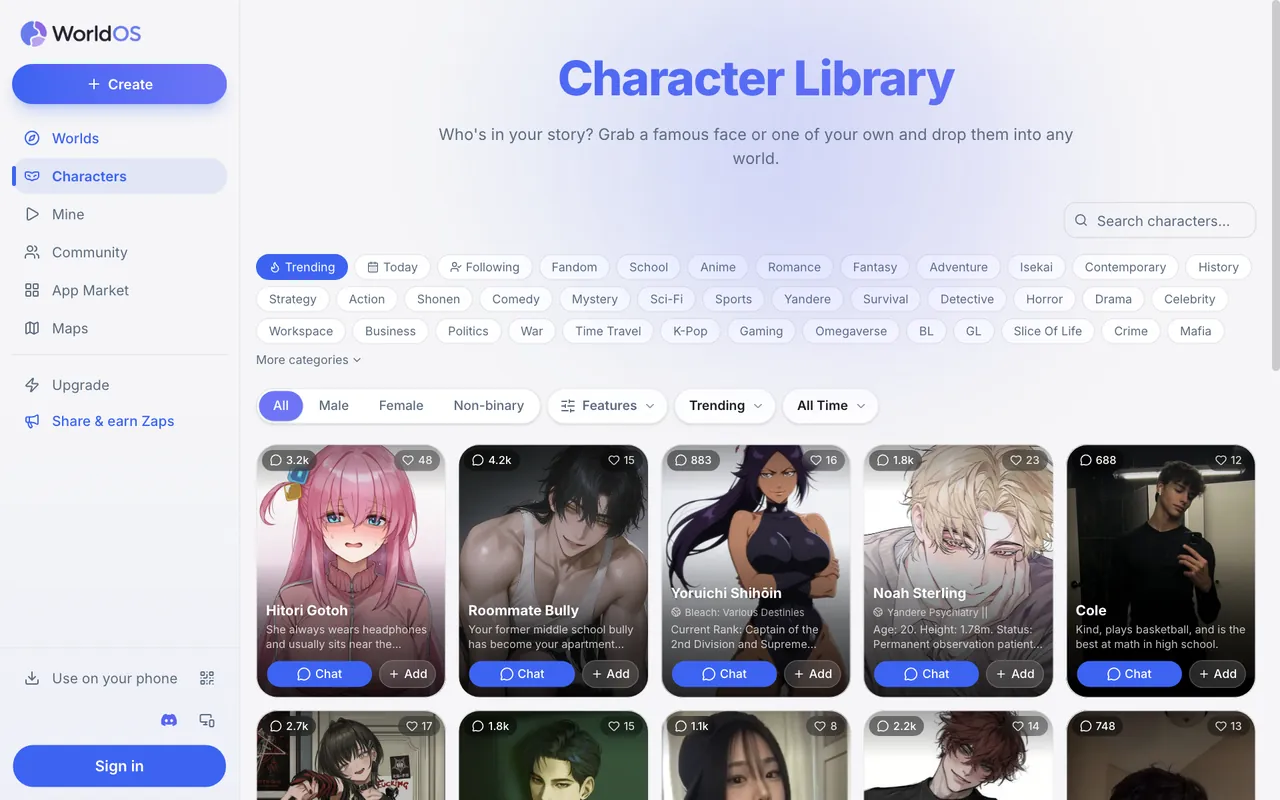
You can play romance and anime worlds other people built, create your own character with a dere personality in a few minutes (the lines above work as a starting description), import a character you already have from Character.AI, a Tavern card and other sources, or drop your character into any world. It is free to play with Zaps every 24 hours and no card; rated content sits behind a per-viewer opt-in.
FAQ
What are the 4 main dere types?
Tsundere (harsh outside, soft inside), yandere (loving until it turns obsessive), kuudere (cool and flat, caring in private) and dandere (shy and quiet until comfortable).
What does "dere" mean?
It comes from deredere, a Japanese word for lovey-dovey or lovestruck. Added to another word, it names how a character behaves when in love: tsun (prickly) + dere, yan (sick) + dere, and so on.
What is the difference between kuudere and dandere?
A kuudere is composed and chooses not to show emotion; a dandere is shy and struggles to speak. Kuuderes seem cold, danderes seem nervous.
What is the rarest dere type?
The fan-coined ones like kanedere, shundere, byoukidere and goudere rarely show up as a character's main trait in anime; they are more common as original-character and fanfic labels.
Are there male dere types?
Yes, every type works for any gender. Oujidere is the one explicitly male term (the male himedere). Common male picks include Inuyasha and Kyo Sohma as tsunderes and Light Yagami as a kamidere.
Can I roleplay a dere character with AI?
Yes. Describe behaviors, not just the label, and let the character change slowly. On WorldOS you can create a dere character in minutes and put them in a world with a full cast and memory, free.
Put your favorite dere in a world
A full cast, a social feed, stats and memory that keeps every jab. Free on WorldOS every day.