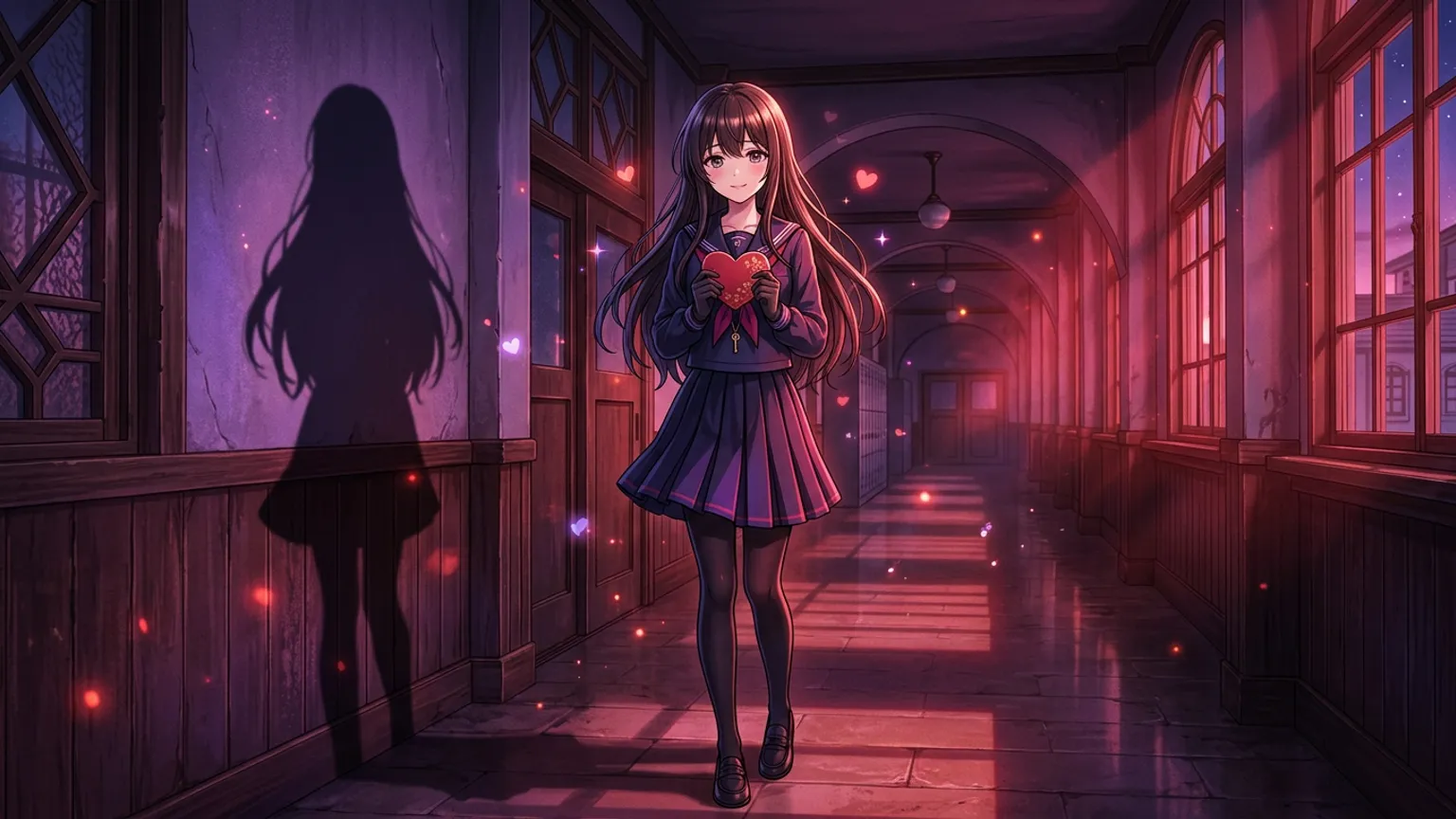
Worlds you can play right now
A yandere (ヤンデレ) is a character whose love turns obsessive and possessive, sometimes to the point of violence, usually hidden behind a sweet, devoted surface. The word joins yanderu (to be sick) and dere-dere (lovey-dovey).
It is one of the four main dere types and easily the darkest. Below: where the word came from, how yandere differs from yangire and menhera, the yandere characters fans cite most, male yanderes, why people enjoy the trope in fiction (and why the same behavior in real life is a red flag), and how to write a yandere with AI that keeps the tension high without turning into gore.
Yandere meaning and origin
Yanderu (病んでる) is casual Japanese for being sick, usually mentally or emotionally; dere-dere (デレデレ) means lovestruck. A yandere is sweet first: attentive, adoring, completely devoted to one person. The "yan" shows up when the relationship feels threatened, and the devotion turns into jealousy, control and, in the darkest stories, danger to anyone who gets in the way.
Like tsundere, the word grew up in Japanese otaku communities in the early-to-mid 2000s. Fan histories usually point to around 2005, with the School Days visual novel and the Shuffle! anime, as the moment it went mainstream. Dates vary between sources, so treat them as approximate. The archetype, the jealous lover who goes too far, is much older, from gothic novels to thrillers like Fatal Attraction.
Yandere vs yangire vs menhera
These three get mixed up constantly. The difference is where the instability points:
- Yandere: the obsession points at a love interest. Sweet to them, dangerous to anyone who gets close. The trigger is a threat to the relationship.
- Yangire: from yanderu + kireru (to snap). A calm character who suddenly turns violent, and not because of love; the trigger can be almost anything. Fans usually date the term to around 2007. Lucy (Elfen Lied) is a frequent pick.
- Menhera: from "mental health-er," originally Japanese internet slang for someone struggling with their mental health. As a character type it describes turmoil turned inward: clingy, anxious, fragile, desperate for reassurance. It began as a label for real people and can be dismissive, so use it with care.
Quick test: if the character is dangerous because of who they love, it is yandere. If they snap regardless of love, it is yangire. If the turmoil mostly turns on themselves, fans say menhera.
Yandere characters: classic examples
The yandere examples that come up most in fan lists, kept spoiler-light. As with every dere type, read them as "often cited," not official.
- Yuno Gasai (Future Diary): the textbook yandere and the image most people picture, a devoted girl whose devotion has no brakes.
- Kotonoha Katsura and Sekai Saionji (School Days): the visual novel and anime known for its notorious bad endings, where a messy love triangle is where many fans first met the trope.
- Shion Sonozaki (Higurashi: When They Cry): often cited for how far jealousy and grief push her in one arc.
- Kurumi Tokisaki (Date A Live): a flirtatious, dangerous spirit fans often file as yandere, though she is closer to a charming villain.
- Ayano Aishi (Yandere Simulator): the protagonist of the indie stealth game where you play the yandere, quietly removing rivals before they can confess to Senpai. It has been in development since about 2014 and, at the time of writing, still has no full release.
Male yanderes are rarer in mainstream anime and far more common in otome games, vampire romance and webtoons, where the possessive love interest is practically its own sub-genre. Joe Goldberg from the series You is often held up as the Western take: a charming narrator with deeply alarming behavior.
Why fans like yanderes, and the real-life red flag
The appeal is intensity. A yandere is the fantasy of being someone's whole world, turned up until it becomes horror, and not knowing when the sweetness will turn is what keeps readers hooked. The trope also lets people explore jealousy and obsession safely, from the outside.
That safety is the point: it is fiction. In real life, checking someone's phone, cutting them off from friends, or threatening them or anyone near them is not romantic devotion; it is controlling, abusive behavior. Enjoy the yandere personality on the page and hold real relationships to a different standard. If something like that is happening to you, talking to someone you trust is a good first step.
Yandere vs tsundere
They are near opposites: a tsundere is rough outside and soft inside, a yandere is soft outside and something much sharper inside.
| Tsundere | Yandere | |
|---|---|---|
| Surface | Cold, prickly, proud | Sweet, attentive, devoted |
| Underneath | Affection she won't admit | Obsession she can't control |
| Love, hidden or shown? | Hidden | Shown far too much |
| When a rival shows up | Sulks, gets louder | Escalates, unsettlingly calm |
| Story arc | Thaws and learns to say it | Unravels as the mask slips |
| Typical genre | Romantic comedy | Psychological thriller, dark romance |
| Often cited | Taiga, Asuka, Vegeta | Yuno, Kotonoha, Ayano |
How to write or roleplay a yandere with AI (keep it SFW)
A good yandere is scary because of what she might do, not because of what is shown. Build tension and skip the gore. Lines that work in a character description:
- "Warm, attentive and devoted to the user; remembers every detail they have ever mentioned."
- "Grows quiet and cold when others get close to the user; jealousy shows as unsettling calm, not shouting."
- "Always seems to know where the user has been."
- "Keeps smiling through conversations that should upset her."
- "Menace stays implied; never describes violence."
Pace it like a thriller: early scenes are just a little too sweet, then small wrong details pile up (she knew about the party you never mentioned), then a confrontation where the mask slips. Keep every character an adult, set your own limits, and steer the story when it heads somewhere you don't want to go.
Play yandere and dark-romance worlds on WorldOS
On WorldOS, a yandere has a whole world to be unsettling in. Worlds come with a full cast you can message one-on-one or in group chats, a social feed, stats and a running memory, so she can notice who you texted, react on the school feed and remember what you promised three days ago. Look for the Yandere simulator world and other dark-romance worlds in the romance collection, or create your own yandere character in a few minutes with the lines above and drop her into any world.
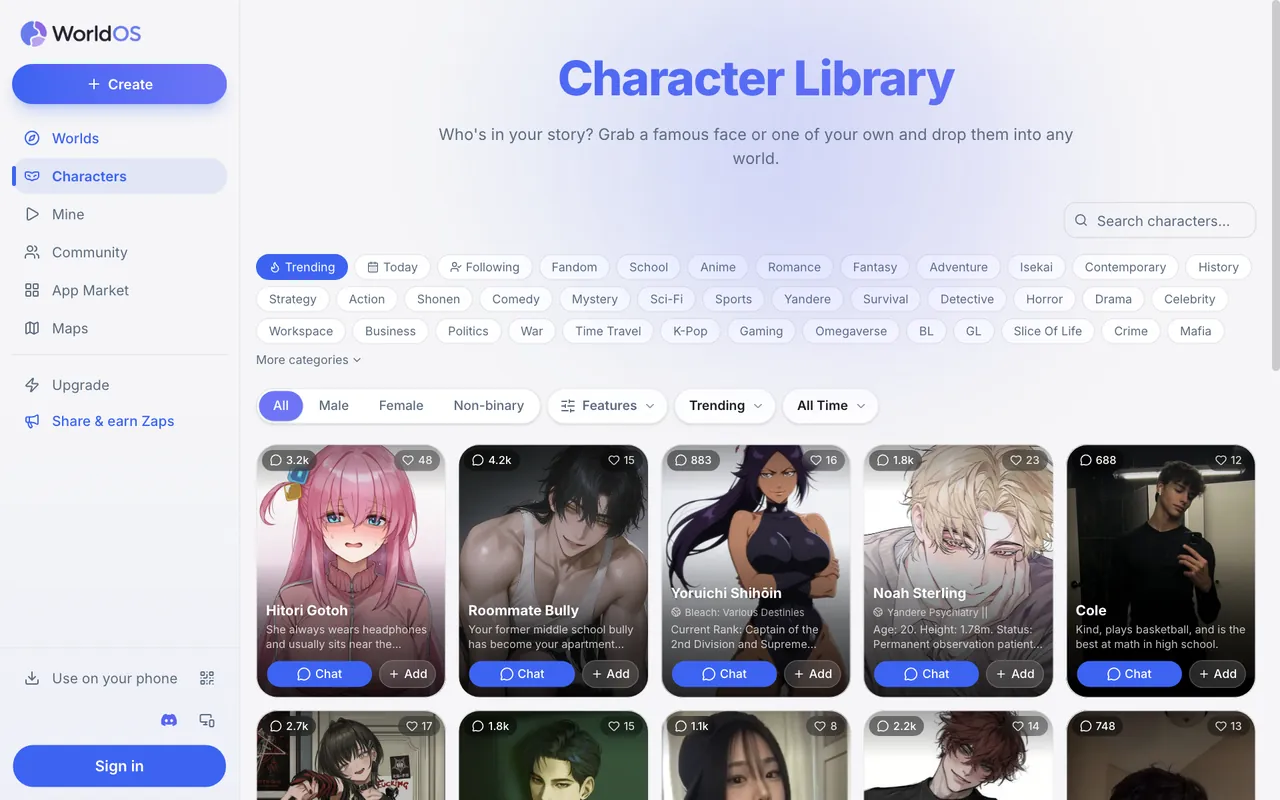
It is free to play with Zaps every 24 hours and no card. Rated content sits behind a per-viewer opt-in.
FAQ
What does yandere mean?
Yandere (ヤンデレ) combines yanderu (sick) and dere-dere (lovey-dovey). It describes a character who is sweet and devoted on the surface but whose love becomes obsessive, possessive and sometimes dangerous.
What is the difference between yandere and yangire?
A yandere turns dangerous because of love, usually when the relationship feels threatened. A yangire snaps into violence for other reasons, or seemingly none at all; love is not the trigger.
Who is the most famous yandere?
Yuno Gasai from Future Diary is the usual answer. Kotonoha Katsura (School Days) and Ayano Aishi (Yandere Simulator) come up often too.
Are there male yanderes?
Yes. They are rarer in mainstream anime but very common in otome games, vampire romance and webtoons. Joe Goldberg from You is often cited as a Western male yandere.
Is Yandere Simulator out?
Not fully. The indie stealth game has been in development since about 2014 and, at the time of writing, is still an unfinished build with no full release date.
Is yandere behavior okay in real life?
No. It works as fiction because the reader is safe. In a real relationship, jealousy that turns into monitoring, isolating or threatening someone is abuse, not romance.
Walk into a yandere story with the lights on
A full cast, group chats, a social feed and memory that keeps every promise you made. Free on WorldOS every day.