Worlds you can play right now
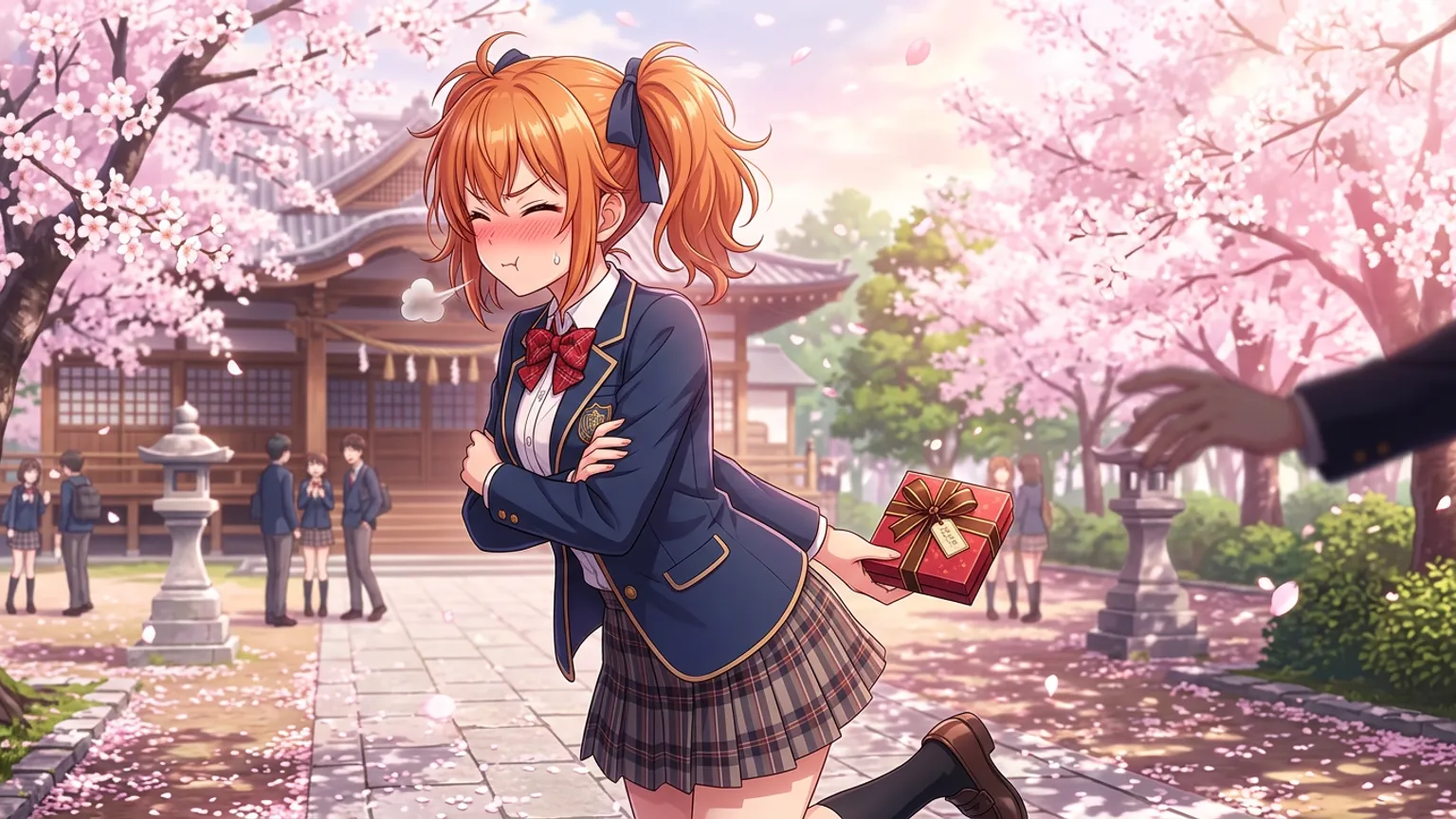
A tsundere (ツンデレ) is a character who acts cold, prickly or even hostile toward someone they like to hide their affection, then lets a softer side slip out over time. The word joins tsun-tsun (prickly, aloof) and dere-dere (lovey-dovey), and it is one of the best-known personality archetypes in anime, manga and games.
Below: where the word came from, the main kinds of tsundere, the tsundere characters fans cite most (male tsunderes included), how tsundere compares with kuudere and yandere, what people mean by it in real life, and how to write or roleplay a tsundere with AI without flattening her into one catchphrase.
Tsundere meaning and origin
Tsun-tsun is a Japanese sound word for turning away in a huff or being standoffish; dere-dere describes someone going soft and lovestruck. Put together, tsundere names a character who swings between the two, usually around the same person. The heart of the trope is the gap: the harsh surface is what makes the rare soft moment land.
Fan histories usually trace the word to Japanese internet forums around 2002, where visual-novel players used it for a heroine who kept flipping between cold and sweet. It spread through 2channel and, by the mid-2000s, had moved from otaku slang into anime marketing and everyday Japanese. Exact dates vary between sources, so treat them as approximate. The archetype is much older than the word: sharp-tongued love interests who secretly care go back decades in manga, and in Western romantic comedy too.
Voice actress Rie Kugimiya, who voiced Taiga Aisaka, Louise (The Familiar of Zero) and Shana (Shakugan no Shana), is so tied to the type that fans often call her the "tsundere queen."
Types of tsundere: tsun-dominant vs dere-dominant
Fans usually sort tsunderes by which side shows more:
- Tsun-dominant (the harsh type): hostile, insulting, sometimes slapstick-violent most of the time; the soft side appears only in rare moments. Early-2000s comedies leaned hard on this version.
- Dere-dominant (the sweet type): mostly kind and easily flustered; the tsun only flares when someone points out that she cares. Modern romances prefer this one because the character is easier to like.
- Situational: cold in public, openly sweet in private. The switch is about who is watching, not about her feelings.
The tsundere trope's signature is the denial line, paraphrased endlessly: "It's not like I like you or anything, b-baka!" The stammer and the insult are the joke; the fact that she did the kind thing anyway is the point. A well-written tsundere also thaws. Over a long story the tsun gets thinner, and the payoff is the moment she stops pretending.
Tsundere characters: classic examples
These are the tsundere examples that come up most often in fan lists. Fans argue about nearly all of them, so read them as "often cited" rather than official.
- Taiga Aisaka (Toradora!): the textbook tsun-dominant tsundere, tiny, fierce and nicknamed the Palmtop Tiger.
- Asuka Langley Soryu (Neon Genesis Evangelion): proud and combative, with the insecurity underneath written far darker than the comedy version.
- Rin Tohsaka (Fate/stay night): composed and competitive in public, flustered and generous in private; often cited as a dere-leaning tsundere.
- Kurisu Makise (Steins;Gate): a scientist who argues with everyone, blushes and denies it; many fans read her as a tsundere with a kuudere's composure.
- Vegeta (Dragon Ball Z): the go-to male tsundere, a proud rival who insists he fights only for himself and keeps showing up for everyone anyway.
- Katsuki Bakugo (My Hero Academia): often cited as a male tsundere, though some fans say he is more an aggressive rival than a romantic type.
Other male tsunderes fans reach for: Inuyasha (Inuyasha) and Kyo Sohma (Fruits Basket). Male tsunderes follow the same pattern; the tsun just shows up more often as rivalry and pride than as romance.
Tsundere vs kuudere vs yandere (and dandere)
The four main dere types all describe how a character acts around someone they care about. The quickest way to tell them apart:
| Type | Surface | Underneath | When complimented | When a rival shows up |
|---|---|---|---|---|
| Tsundere | Prickly, proud, hostile | Affection she refuses to admit | Denies it, angrily | Sulks and gets louder |
| Kuudere | Calm, flat, blunt | Quiet warmth shown through actions | "I see." | Barely reacts, then acts |
| Yandere | Sweet and devoted | Obsession and possessiveness | Glows, wants more | Escalates, alarmingly calm |
| Dandere | Shy and silent | Feelings she is too nervous to say | Freezes, turns red | Worries quietly |
In one line: a tsundere hides affection, a kuudere doesn't display it, a yandere shows far too much of it, and a dandere can't get the words out.
What does tsundere mean in real life?
Outside anime, people use tsundere loosely for anyone gruff on the outside and caring underneath: the friend who roasts your outfit and then lends you a jacket, the coworker who calls your plan terrible and stays late to help with it. In Japan the word is common in casual speech and even in advertising, and cats are the classic "tsundere" animal, aloof until they decide to be affectionate.
One caution. In fiction the insults are a comic mask the audience can see through. In a real relationship, someone who belittles or hurts you and calls it affection is not being cute. A tsundere personality is charming on the page; real people deserve the kindness said out loud.
How to write or roleplay a tsundere with AI
Type only "tsundere" into a character description and most AI models give you a character who says "b-baka" every line and nothing else. Describe behavior instead. Lines that work:
- "Answers kindness with a jab, then quietly does the helpful thing anyway."
- "Never admits caring out loud; changes the subject or gets louder when caught."
- "Proud and competitive; hates losing, especially to the user."
- "Softens only in rare, private moments, and is embarrassed about it afterward."
- "Remembers small things the user said and uses them later, without admitting it."
Pacing the thaw matters more than the prompt. Decide roughly how the tsun fades: early scenes are all denial, middle scenes bring slips she scrambles to cover, and a late scene is where she finally says it plainly. If the character goes soft too fast, nudge the story ("she hasn't forgiven him yet") instead of rewriting her. And keep every character in a romance an adult.
Meet tsunderes in WorldOS romance and anime worlds
On WorldOS, a tsundere doesn't have to live in a single chat window. A world gives her a full cast and apps around her: message the tsundere class president one-on-one, get pulled into a group chat with her rival, watch the school social feed gossip about you two, and see relationship stats shift. The world keeps a running memory, so the day she drops the act lands, because the story remembers every jab before it.
Play romance and anime worlds other people built, create your own tsundere character in a few minutes (the lines above work as a starting description), or import one you already have from Character.AI or a Tavern card and drop her into any world. It is free to play with Zaps every 24 hours and no card.
FAQ
What does tsundere mean?
Tsundere (ツンデレ) combines tsun-tsun (prickly, standoffish) and dere-dere (lovey-dovey). It describes a character who acts cold or hostile toward someone they like to hide their feelings, and gradually shows a softer side.
Who is the most famous tsundere?
Taiga Aisaka from Toradora! is the most common answer, with Asuka Langley Soryu, Rin Tohsaka and Kurisu Makise close behind.
Is there a male tsundere?
Yes. Vegeta (Dragon Ball Z), Inuyasha, Kyo Sohma (Fruits Basket) and Katsuki Bakugo (My Hero Academia) are the male tsunderes fans cite most.
What is the difference between tsundere and kuudere?
A tsundere is hot-tempered and hides affection behind hostility. A kuudere is calm and flat, and shows care through quiet actions rather than words. One is loud, the other is cool.
What is the opposite of a tsundere?
Fans usually say deredere, a character who is openly sweet and affectionate with no prickly side at all. Some also name the yandere, who is sweet outside and dangerous inside.
Is being a tsundere a red flag in real life?
Gruff but kind is fine; plenty of caring people are bad at saying it. Insults or hurtful behavior passed off as affection is different, and it is not something to excuse because it looks cute in anime.
Play opposite a tsundere who remembers every jab
A full cast, group chats, a social feed and memory that makes the thaw worth it. Free on WorldOS every day.