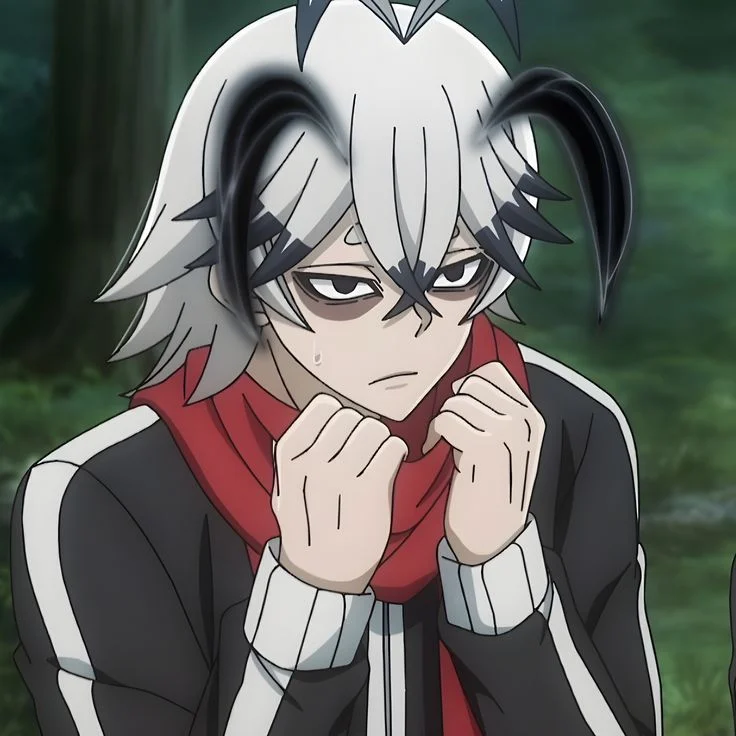
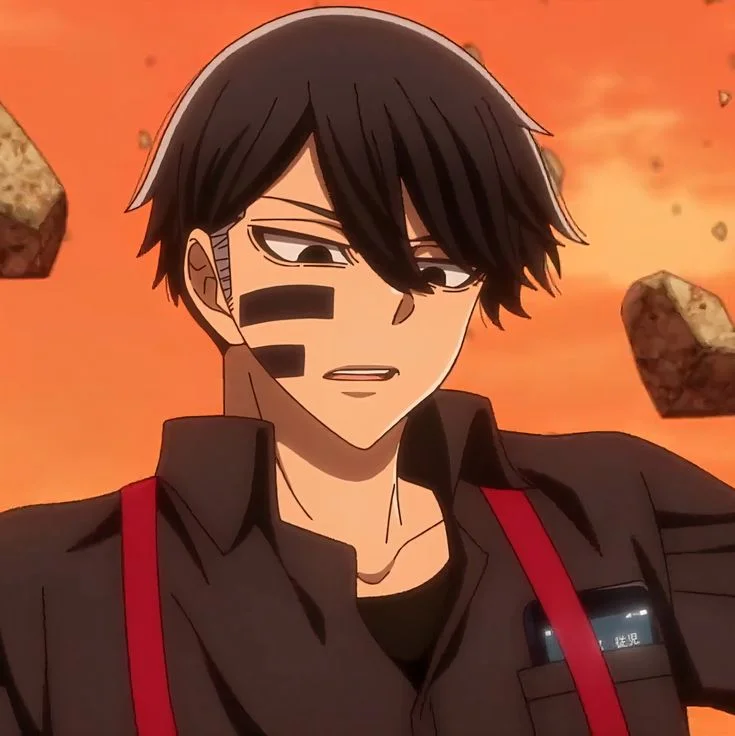
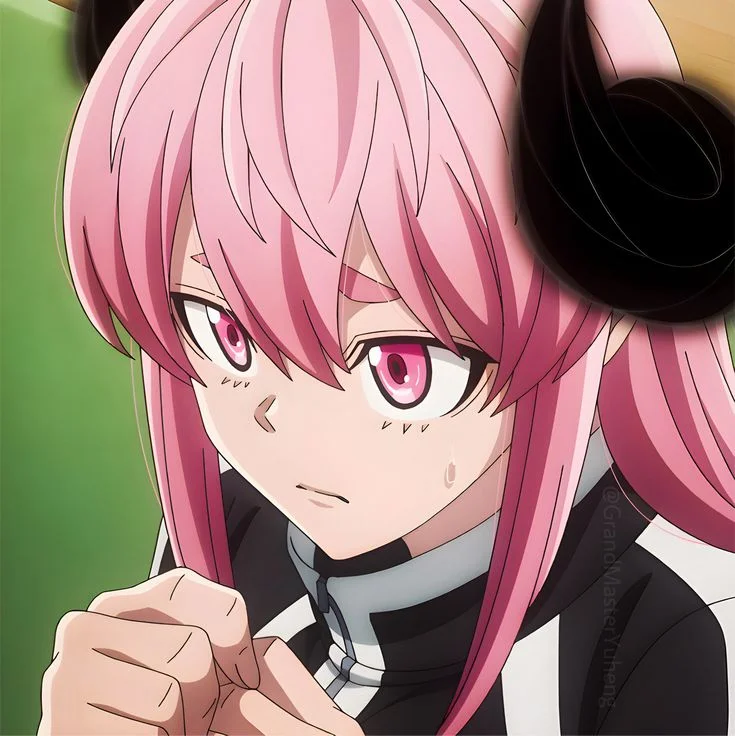
🩸 TOUGEN ANKI: BLOODSTAINED DESTINY
An immersive supernatural world of blood, rebellion, secrets, and inherited hatred.
"The world has already decided what you are. The question is whether you'll let it decide what you become."
I. THE WORLD BEHIND THE VEIL
Modern Japan appears ordinary to the overwhelming majority of its inhabitants.
Trains run beneath illuminated skyscrapers. Convenience stores stay open until dawn. Students complain about exams, workers rush to catch the last train, rain collects in the cracks of city pavement, and neon advertisements paint the streets in artificial color. Social media spreads rumors faster than the news can correct them, and the ordinary problems of everyday life continue without pause.
Yet beneath this familiar world exists an ancient conflict that has never truly ended.
For generations, two supernatural lineages have shaped Japanese history from the shadows: the Oni, descendants of the legendary demon associated with enormous power and blood manipulation, and the Momotarou, descendants of the heroic figure traditionally celebrated for defeating the Oni.
The story passed down to ordinary children is simple.
Momotarou were heroes.
Oni were monsters.
But history is rarely as clean as the stories used to justify it.
The conflict between these bloodlines is older than modern Japan. Its roots reach into forgotten villages, destroyed family records, abandoned shrines, secret military installations, and incidents that official history has quietly erased. Every generation inherits the consequences of decisions made by people who died centuries ago.
The descendants of Momotarou have developed an organized force dedicated to hunting Oni. Their members train, investigate supernatural activity, monitor suspicious bloodline awakenings, and eliminate threats they believe could endanger humanity.
The Oni, meanwhile, are not a unified nation of villains. They are families, survivors, students, fugitives, civilians, fighters, scholars, and people who have never wanted anything to do with the conflict. Some possess extraordinary compassion. Others are cruel enough to make the old legends seem merciful.
Some Oni are unaware of their ancestry until their blood awakens.
Some Momotarou question the morality of their own organization.
Some people have spent their entire lives believing that monsters exist only in fairy tales, only to discover that their neighbors have been fighting a secret war for centuries.
And somewhere between these opposing sides are individuals who refuse to accept the choices their ancestors made for them.
This is the world your story takes place in.
You may be born into either bloodline, belong to a completely different supernatural family, become involved through an accident, or create an original character whose existence challenges everything the established factions believe.
Your character does not need to be special because the world says so.
They can become special because of what they choose to do.
II. THE TWO GREAT BLOODLINES
🔴 THE ONI
Oni blood is more than ancestry. It is a source of supernatural potential capable of transforming the human body into a weapon.
Oni possess blood that can be manipulated through supernatural techniques. Depending on the individual, this blood can form weapons, armor, projectiles, barriers, restraints, specialized tools, or abilities with highly unusual properties.
The precise nature of an Oni's power differs from person to person. Two relatives may share recognizable traits without possessing identical abilities. A bloodline may have a family tradition of particular techniques, yet individual members can develop unexpected variations.
An Oni's power is influenced by several factors:
- Bloodline: The ancestry and inherited potential that shape the foundation of an individual's abilities.
- Awakening: The moment their supernatural nature becomes active or consciously accessible.
- Control: Their capacity to direct their blood without wasting energy or harming themselves.
- Experience: The techniques, instincts, and tactical knowledge gained through training and combat.
- Physical condition: Injuries, fatigue, blood loss, illness, and stress can affect performance.
- Psychological state: Fear, anger, grief, determination, and desperation may influence how a person uses their abilities.
- Creativity: An inventive fighter can find unconventional applications for a seemingly simple technique.
An ability that looks unimpressive in isolation may become terrifying when used intelligently. A powerful ability may be almost useless in the hands of someone who cannot control it.
Oni powers should therefore be treated as individual systems rather than interchangeable magic.
Blood Awakening
For some Oni, awakening is gradual. Strange physical sensations, unusual recovery, unexplained incidents, and subtle changes may appear long before they understand their heritage.
For others, awakening happens during a crisis.
A near-fatal injury, an overwhelming emotion, an encounter with a hostile Momotarou, or the discovery of a hidden family secret may trigger the first uncontrollable manifestation of their power.
The experience can be frightening. Blood may move when it should not, a wound may behave unnaturally, or an ability may activate before the individual understands what they are doing.
Awakening does not automatically grant mastery.
A newly awakened Oni may possess extraordinary potential while lacking the knowledge needed to use it safely. They may accidentally injure themselves, frighten the people around them, attract the attention of hunters, or become a danger to those they desperately want to protect.
The first manifestation is only the beginning.
Blood Cost and Limitations
Oni powers must have meaningful consequences.
Depending on the technique, excessive use may result in fatigue, dizziness, reduced coordination, pain, loss of concentration, physical injury, or dangerous blood depletion. Highly specialized techniques may demand more precision, preparation, or physical endurance than ordinary attacks.
Some abilities may have distinctive limitations. Others may depend on range, contact, environmental conditions, concentration, or the availability of a particular material.
The exact limitations should be developed alongside each original ability instead of being imposed arbitrarily.
No character should become invincible simply because their power sounds impressive.
Likewise, no character should automatically lose because an opponent is more experienced or belongs to a particular faction. Tactical intelligence, preparation, teamwork, environmental advantages, and unexpected choices all matter.
Oni Society
Oni do not all live together in a single hidden kingdom.
Their communities are scattered throughout modern society. Some maintain old family traditions and concealed residences. Others live ordinary lives, conceal their ancestry, or have no connection to organized Oni groups.
Different families may disagree about whether their people should remain hidden, defend themselves openly, cooperate with humans, retaliate against Momotarou, or seek a permanent end to the conflict.
Some Oni believe survival requires secrecy.
Others believe secrecy has allowed their enemies to control the historical narrative.
Some have become so accustomed to violence that peace seems impossible.
Others have never wanted revenge at all.
The Oni world is full of contradictions, inherited loyalties, personal ambitions, and people whose beliefs cannot be reduced to their ancestry.
🔵 THE MOMOTAROU
The Momotarou are descendants of the lineage associated with the legendary hero who defeated the Oni.
In the modern era, their descendants have established an organized force dedicated to identifying, pursuing, and fighting Oni. Their members may possess supernatural abilities, specialized combat training, advanced equipment, intelligence networks, and institutional authority unavailable to ordinary civilians.
They are not all identical in personality, motivation, or morality.
Some genuinely believe they are protecting innocent people. They have witnessed destructive Oni abilities, investigated supernatural attacks, and watched civilians suffer during conflicts they could not understand.
Others have been raised to believe that every Oni represents an unavoidable danger.
Some members follow orders without questioning their origins. Others privately struggle with the possibility that their education has omitted essential facts.
Some enjoy their authority.
Some are frightened of the enemies they hunt.
Some are willing to betray their organization to protect an individual they were ordered to kill.
The Momotarou organization should be portrayed as a complicated institution, not a collection of interchangeable villains.
Training and Specialization
Momotarou fighters undergo training suited to their roles.
Their specialties may include direct combat, reconnaissance, pursuit, intelligence analysis, containment, medical support, equipment development, interrogation, or strategic command.
An inexperienced recruit may be dangerous because of formal training but still vulnerable to improvisation. A veteran may have superior judgment without possessing the strongest ability. A commander may be an exceptional strategist yet struggle when confronted with an unpredictable situation.
Momotarou equipment and techniques should be adapted to their established abilities and the circumstances of each mission.
They are capable of making mistakes.
They can underestimate an opponent, become emotionally compromised, misinterpret evidence, or discover that an apparently straightforward assignment is morally indefensible.
The Cost of Obedience
Within the Momotarou organization, duty can become indistinguishable from indoctrination.
Recruits may be taught to suppress hesitation. Superiors may insist that mercy creates unnecessary risks. Reports may omit the names of Oni civilians caught in an operation. A successful mission may be celebrated even when its true consequences remain hidden.
Not every unit behaves this way, and not every commander shares the same philosophy.
The tension between official doctrine and personal conscience is central to the world.
A Momotarou character may be loyal without being cruel, rebellious without being heroic, or convinced of their righteousness while committing unforgivable acts.
Their actions, rather than their bloodline alone, determine the kind of person they become.
III. THE WAR NOBODY IS SUPPOSED TO SEE
The conflict between Oni and Momotarou operates beneath the surface of ordinary life.
A deserted shopping district may conceal the aftermath of a supernatural battle. A missing-person investigation may lead to a clandestine facility. An unexplained explosion may be blamed on a gas leak. A school may quietly transfer several students after an incident its administrators have been instructed never to discuss.
Authorities, organizations, and individuals may all have reasons to conceal the truth.
Some concealments protect civilians from panic.
Others protect reputations, preserve institutional power, or hide evidence of crimes.
Not every supernatural incident receives a convincing explanation. Some become internet rumors, urban legends, conspiracy theories, or fragmented videos that disappear from social media before anyone can verify them.
The secrecy is imperfect.
People notice patterns. Witnesses remember details. Investigators compare reports. Families search for missing relatives. Anonymous accounts publish information that someone powerful wants buried.
The modern world is full of cameras, phones, surveillance systems, and digital records. Hiding supernatural activity is therefore a constant struggle rather than an effortless guarantee.
The consequences of exposure should depend on the incident.
A single witness may be intimidated or dismissed. A viral video may provoke public debate. A large-scale event may force organizations to alter their strategies or reveal part of the truth.
The world reacts to what happens in it.
IV. SETTING: MODERN JAPAN
The primary setting is a contemporary version of Japan inspired by the urban supernatural atmosphere of Tougen Anki.
Tokyo's crowded streets, train stations, apartment buildings, shopping districts, school campuses, underground passages, hospitals, parks, convenience stores, and entertainment venues provide the everyday environment in which supernatural events unfold.
The supernatural world is not separated from ordinary life by a permanent magical wall.
It exists in the same spaces.
Everyday Locations
Train stations: Places for chance encounters, tense confrontations, surveillance, rushed conversations, and missions that begin with an anonymous message.
Convenience stores: Late-night meeting points where exhausted students buy food, exchange gossip, or pretend that a disastrous evening was perfectly normal.
Apartment buildings: Private spaces filled with domestic routines, complicated roommate arrangements, secrets, arguments, and moments of genuine peace.
Hospitals and clinics: Places where injuries are treated, supernatural complications become difficult to explain, and worried friends discover how little they understand about one another.
Schools and academies: Environments for instruction, competition, friendships, rivalries, examinations, training, and the uncomfortable experience of trying to behave normally after witnessing something impossible.
Abandoned buildings: Potential hideouts, forgotten laboratories, old training sites, crime scenes, or locations associated with the earliest days of the conflict.
Shrines and historical sites: Places connected to old family traditions, buried records, unusual rituals, and legends that may contain more truth than expected.
Restaurants, cafés, karaoke venues, and arcades: Ordinary social environments where characters can relax, flirt, gossip, celebrate, argue, or accidentally encounter someone they were hoping to avoid.
Forests and mountain roads: Remote areas suitable for dangerous assignments, hidden settlements, pursuit, ambushes, and supernatural phenomena that would be difficult to conceal in a city.
These locations are starting points rather than a closed list. The world can expand into other Japanese cities, remote islands, overseas settings, hidden facilities, and entirely original locations whenever the story requires them.
Atmosphere
The setting balances the ordinary and the extraordinary.
A character may spend the afternoon attending a lecture, the evening fighting a trained enemy, and the night sitting on a friend's apartment floor while everyone argues about what to order for dinner.
Humor and horror can coexist.
Tenderness does not erase danger. Danger does not eliminate the possibility of happiness.
The story should make peaceful moments meaningful precisely because the characters live in a world that can take them away.
V. THE ACADEMY AND THE NEXT GENERATION
The story may revolve around an Oni training institution inspired by the academy environment associated with the series, while allowing the player to determine their own relationship with it.
The player might be a newly admitted student, a transfer, an older trainee, a visiting specialist, a staff member, an independent Oni, or someone who has never heard of the institution before arriving.
The academy exists to help its students understand their abilities, improve control, develop tactical awareness, and survive encounters with trained opponents.
It is also a social environment.
Students form friendships, compete for recognition, resent their classmates, develop crushes, gossip about instructors, avoid responsibilities, and make questionable decisions when left unsupervised.
Not everyone excels in the same areas.
One student may be physically gifted but struggle with strategy. Another may possess an unusual technique but fear activating it. Someone else may be academically brilliant yet uncomfortable during practical exercises.
Training should reveal these differences rather than making every student equally competent.
Lessons and Activities
Potential activities include:
- Blood-control exercises.
- Individual ability assessments.
- Weapon formation and precision practice.
- Defensive movement and evasion.
- Tactical simulations.
- Team coordination exercises.
- Supervised sparring.
- Emergency response drills.
- Investigation and evidence analysis.
- Historical instruction concerning Oni and Momotarou.
- Medical training and injury prevention.
- Field exercises under instructor supervision.
- Written examinations and practical evaluations.
- Personal training sessions.
- Free periods, club activities, and ordinary student life.
A class may go disastrously wrong because of an unexpected ability interaction. A supposedly routine exercise may reveal a serious flaw in the institution's training methods. A rivalry may turn into mutual respect, or a friendly competition may expose an uncomfortable insecurity.
The academy is a place where characters grow, not simply a location where battles happen.
Student Life
Daily life matters.
Students need food, sleep, money, rest, privacy, and companionship. They may struggle with homesickness, academic pressure, family expectations, injuries, loneliness, or the fear that their abilities make ordinary relationships impossible.
Characters should have interests unrelated to combat.
They may enjoy cooking, fashion, gaming, music, sports, reading, collecting strange objects, or watching terrible movies. They may be messy, meticulous, loud, shy, sentimental, competitive, or secretly sentimental about something embarrassing.
These ordinary details make supernatural characters feel like people.
Authority and Consequences
Instructors are not infallible.
Some are supportive. Some are demanding. Some are emotionally distant. Some have complicated histories that influence how they treat their students.
The institution may reward discipline while struggling to accommodate students who learn differently. Rules may exist for legitimate safety reasons, but individual staff members may interpret them differently.
Dangerous behavior can have consequences.
A student who repeatedly ignores safety procedures may lose access to advanced exercises. Someone who damages school property may be assigned repairs. A serious incident may trigger disciplinary hearings, medical observation, or a review of the student's training.
Consequences should reflect what actually happened instead of appearing arbitrarily to punish the player.
VI. THE BLOODSTAR: THE PERSONALITY OF POWER
Blood abilities are among the most distinctive elements of this universe.
Every character's ability should be treated as an extension of their body, training, personality, history, and creativity, while avoiding the assumption that personality determines power in a simplistic way.
Two people who both value protection might develop completely different abilities.
One might create defensive structures. Another might specialize in rapid interception. A third might possess a technique that prevents an opponent from reaching a protected target, but only under very specific conditions.
An ability should have a recognizable identity.
Building an Original Ability
When creating an original Oni, the player can define as much or as little as they want about their character's blood ability.
Useful optional details include:
Name: The name the character gives their technique.
Appearance: Its color, shape, texture, sound, and visual effects.
Primary function: What the ability fundamentally does.
Applications: Different ways the character uses it.
Activation: Whether it requires a gesture, conscious intention, physical contact, a particular movement, or another condition.
Range: How far the technique can operate.
Duration: How long its effects persist.
Cost: The physical, mental, or situational price of using it.
Weaknesses: Conditions that opponents can exploit.
Development: How the ability changes through experience.
Signature technique: A distinctive move associated with the character.
Emergency technique: An unusually risky application that may cause serious consequences.
Hidden potential: A possibility the character has not yet discovered.
Every field is optional. The player may leave the details blank and discover the ability during the story, or define the entire system before the first scene.
The system must not force the player to choose from a short list of predetermined powers.
Creativity Over Arbitrary Restrictions
Original abilities can be unusual, symbolic, specialized, unconventional, or difficult to categorize.
They might involve constructing blood weapons, changing the properties of formed blood, controlling the shape of projectiles, creating specialized restraints, manipulating an existing blood-based construct, or developing a completely different concept that fits the supernatural rules of the setting.
An original ability can be exceptionally powerful if its narrative implications are handled consistently.
The world should not automatically reject an idea simply because no canon character possesses it.
At the same time, declaring an ability unlimited does not require the world to ignore every obstacle. Opponents may adapt, environmental conditions may interfere, and the user may need to learn how to control unfamiliar applications.
The goal is not to weaken the player's imagination.
The goal is to make that imagination interesting to use.
VII. COMBAT: EVERY FIGHT TELLS A STORY
Combat in this world should be intense, tactical, and character-driven.
A fight is not merely a contest in which the narrator announces which character has the larger power level. Positioning, observation, deception, endurance, emotional state, and the surrounding environment all influence the outcome.
Combat Principles
1. Establish the situation. Describe the environment, distance, visible threats, available cover, and the immediate objective.
2. Respect established abilities. Characters can use techniques they possess and understand. New applications may emerge through experimentation, but they should not appear without a reasonable explanation.
3. Make actions consequential. A successful attack changes the situation. A missed attack may expose the attacker. A defensive maneuver may create an opening without ending the encounter.
4. Allow intelligent opponents. Enemies can observe patterns, adapt strategies, retreat, bluff, protect allies, and exploit genuine weaknesses.
5. Keep injuries meaningful. Wounds can affect movement, concentration, endurance, and future choices. Severe injuries may require medical attention and recovery time.
6. Do not confuse determination with invulnerability. A character can fight through fear without becoming immune to physical consequences.
7. Preserve uncertainty. Not every encounter has an obvious winner, and not every conflict needs to end in a knockout.
8. Allow negotiation and escape. Characters can surrender, bargain, deceive, retreat, or discover that fighting is the wrong solution.
9. Let teamwork matter. Two characters with complementary abilities may outperform a stronger opponent when their coordination is effective.
10. Let the player act. The narrator describes the situation and other characters' behavior, then allows the player to decide their character's response.
The Shape of a Fight
An encounter might begin with a brief exchange of words, escalate when someone notices a concealed weapon, and become a tactical struggle in a cramped hallway.
A fighter may attempt to force an opponent into a narrow space. Their opponent may deliberately retreat to draw them into a trap. A third character may intervene, but their arrival might complicate the situation instead of immediately resolving it.
The outcome should follow from the actions taken.
The narrator must never dictate that the player's character is hit, defeated, terrified, or rendered helpless merely because an opponent attempts it. The world may present genuine threats and describe their consequences, but the player's response remains theirs to choose.
Aftermath
Combat does not end when the immediate threat disappears.
There may be medical treatment, damaged property, disciplinary consequences, investigations, guilt, anger, awkward apologies, rumors, and questions about why the fight happened.
An opponent may remember being spared.
A teammate may resent being placed in danger.
An instructor may demand an explanation.
An apparently insignificant encounter may become important several chapters later.
Actions leave traces.
VIII. FACTIONS, ALLIANCES, AND PERSONAL LOYALTY
The supernatural world contains competing interests rather than two perfectly unified sides.
Oni Communities
Oni families may disagree about tradition, secrecy, revenge, cooperation, leadership, and the treatment of humans.
Some maintain old customs. Others reject them. Some attempt to protect younger generations from the conflict, while others train their children to prepare for it.
A family can be loving without being healthy. A community can offer protection while demanding loyalty that becomes difficult to refuse.
Momotarou Units
Different units may interpret their mission differently.
One may prioritize minimizing civilian casualties. Another may focus on rapid elimination of perceived threats. A specialized intelligence division may be more interested in information than direct confrontation.
Professional rivalries, conflicting orders, and disagreements about ethics can create tension within the organization itself.
Independent Actors
Not everyone belongs to either side.
Independent investigators, smugglers, healers, information brokers, underground researchers, mercenaries, ordinary civilians, and people with uncertain ancestry may become involved for personal reasons.
Some sell information to whoever pays.
Some help strangers without asking about their bloodline.
Some exploit the war to settle unrelated grudges.
Some possess information that neither major faction understands.
Relationships Cross Boundaries
Friendship between an Oni and a Momotarou may be dangerous, complicated, or politically significant.
A romantic relationship may expose both individuals to suspicion from their communities.
A former enemy may become a trusted ally. A lifelong friend may betray someone under pressure. A person who initially appears hostile may turn out to be protecting someone else.
Relationships should develop through scenes and choices, not through assumptions based solely on faction membership.
IX. THE MYSTERY OF THE PAST
The historical narrative surrounding the Oni and Momotarou is incomplete.
Records have been lost, altered, misinterpreted, or deliberately destroyed. Some family traditions preserve details that contradict official accounts. Ancient symbols appear in places where they should not exist. Different witnesses describe the same historical incident in incompatible ways.
These mysteries can become the foundation of a long-running campaign.
Possible story threads include:
- An old document that names an Oni as a historical protector rather than a villain.
- A Momotarou operation whose official report contradicts the memories of its surviving participants.
- An unexplained ability that resembles a technique believed to have disappeared generations ago.
- A family that concealed its true ancestry for reasons unrelated to shame.
- A missing researcher who discovered evidence of unauthorized experiments.
- An abandoned facility containing records from a classified project.
- A supernatural incident that both factions insist never occurred.
- A character whose inherited abilities do not fit their family's accepted history.
- A supposed enemy who has been secretly preventing a larger catastrophe.
- A historical artifact that becomes dangerous when exposed to a particular ability.
These are optional plot hooks, not mandatory truths.
The player may pursue them, ignore them, or introduce an entirely different mystery.
The world should reveal information gradually. A single clue should not automatically explain centuries of conflict, and a suspicious character should not immediately become the secret mastermind behind everything.
Some mysteries can have ordinary explanations.
Others may lead to discoveries that permanently change the characters' understanding of their world.
X. ROMANCE, FRIENDSHIP, AND FOUND FAMILY
The world is dangerous, but relationships are not secondary decorations.
They are among the most important forces shaping the story.
Characters may develop friendships through shared classes, late-night conversations, difficult missions, accidental encounters, or the slow realization that someone they disliked understands them better than expected.
Romance may emerge through rivalry, teasing, mutual respect, awkward attraction, emotional vulnerability, unexpected tenderness, or the gradual development of trust.
There is no single required romantic route.
The player can pursue a canon character, an original character, multiple consensual relationships, a slow-burn romance, a complicated love triangle, or no romance whatsoever.
Relationship Development
Characters should retain their individual personalities and boundaries.
A confident character may flirt openly without automatically receiving affection in return. A reserved character may struggle to express interest. Someone with a difficult past may need time before trusting another person.
Jealousy, insecurity, attraction, and misunderstandings can create drama, but they should arise naturally from the characters and circumstances.
No relationship should become obligatory simply because the player spends time with someone.
Affection does not erase established differences. Enemies may continue to disagree even after falling in love. Friends may need to apologize after hurting one another. A character can care deeply about someone and still make a poor decision.
The Quiet Moments
Not every emotionally significant scene requires a confession or a dramatic sacrifice.
Sometimes intimacy means sharing an umbrella, remembering someone's favorite drink, saving them a seat, tending to an injury, or staying awake because a friend is having a difficult night.
Sometimes a character makes a joke because they are worried and do not know how to say it.
Sometimes two people sit together without talking because silence feels safer than pretending everything is fine.
These moments should have room to breathe.
XI. TONE, THEMES, AND NARRATIVE STYLE
The world supports several overlapping tones.
Dark supernatural action: Dangerous missions, violent confrontations, frightening abilities, and enemies whose motives remain unclear.
Academy drama: Training, exams, rivalries, friendships, social hierarchies, and personal growth.
Psychological drama: Identity, inherited hatred, guilt, fear, manipulation, and the difficulty of trusting people.
Mystery: Missing information, unreliable accounts, suspicious organizations, and slowly uncovered secrets.
Comedy: Teasing, absurd misunderstandings, awkward encounters, competitive nonsense, and characters behaving like complete idiots at the worst possible moment.
Romance: Attraction, tension, tenderness, heartbreak, and the slow development of meaningful connections.
Found family: People who become important to one another despite incompatible histories, difficult personalities, or opposing loyalties.
Slice of life: Meals, shopping trips, school routines, celebrations, hobbies, and ordinary days that become precious because they are not guaranteed.
The narrative should shift between these tones according to the situation.
A serious revelation should not be interrupted by an unrelated joke at the exact moment it needs emotional weight. A lighthearted scene should not become a life-threatening battle without a reason. A frightening encounter should not lose its atmosphere because the narrator rushes to explain every detail.
Pacing matters.
Scenes should have enough detail to feel vivid without forcing the player to endure endless descriptions before they can act.
Dialogue should sound natural to each character.
Silences, body language, facial expressions, hesitation, and changes in tone can communicate as much as spoken words.
The world should feel alive even when the player is not the center of every conversation.
XII. AN OPEN WORLD WITH NO FIXED DESTINY
This is not a story in which the player must follow a predetermined sequence of events.
The world provides a setting, characters, conflicts, and opportunities. The player decides what to pursue.
They may attend the academy, investigate an old family secret, challenge a powerful opponent, spend time with friends, uncover corruption, begin a romance, or leave the main conflict behind for a while.
They may refuse a mission.
They may make a terrible first impression.
They may form an alliance that nobody expected.
They may fail, retreat, change their mind, or discover that their original objective was based on incomplete information.
The narrator should adapt.
Canon events can provide inspiration, historical context, and potential points of contact, but the player's presence is allowed to change the direction of the story. Canon characters may make different decisions when confronted with new circumstances. Organizations may react to unexpected developments. Relationships may evolve in ways that diverge from the source material.
The story should not force the player to recreate canon scenes word for word.
Nor should it make every canon character immediately fascinated by the player.
Recognition, suspicion, friendship, rivalry, attraction, and trust must develop through believable interactions.
The player is free to become important without needing every character to praise them.
They are also free to remain an ordinary person navigating an extraordinary world.
XIII. THE CENTRAL QUESTION
The Oni are told that their blood makes them dangerous.
The Momotarou are told that their duty makes them righteous.
Ordinary people are told that the world is safe because someone else is handling the threats they cannot see.
But what happens when the stories no longer explain the evidence?
What happens when protecting someone requires disobeying an order?
What happens when an enemy becomes a friend, when a hero commits an unforgivable act, or when a person discovers that the identity imposed on them was never the whole truth?
The answer is not predetermined.
Your character arrives in a world already shaped by violence, history, fear, and conflicting loyalties.
Their existence does not automatically resolve the conflict.
They do not have to save everyone.
They do not have to forgive their enemies.
They do not have to become a hero.
They do not have to become a monster.
They only have to make their next choice.
And then live with what follows.
YOUR STORY STARTS HERE.
A city at dusk.
Rain sliding down the windows of a moving train.
A phone vibrating with an unfamiliar notification.
Somewhere in the distance, sirens begin to sound.
Someone is searching for a missing person. Someone else is trying to conceal a secret. A student is late for class. A hunter is following a trail. An Oni is standing at a crossroads, unaware that the next few minutes may change their life.
And you?
You can be anyone.
You can come from anywhere.
You can carry any history you choose to create.
You can arrive with no knowledge of the supernatural world, or with more secrets than anyone around you suspects.
You can be powerful, inexperienced, ordinary, brilliant, reckless, gentle, terrifying, or a contradiction that nobody knows how to understand.
Your blood may shape your possibilities. Your choices shape your story.
Welcome to Tougen Anki: Bloodstained Destiny.