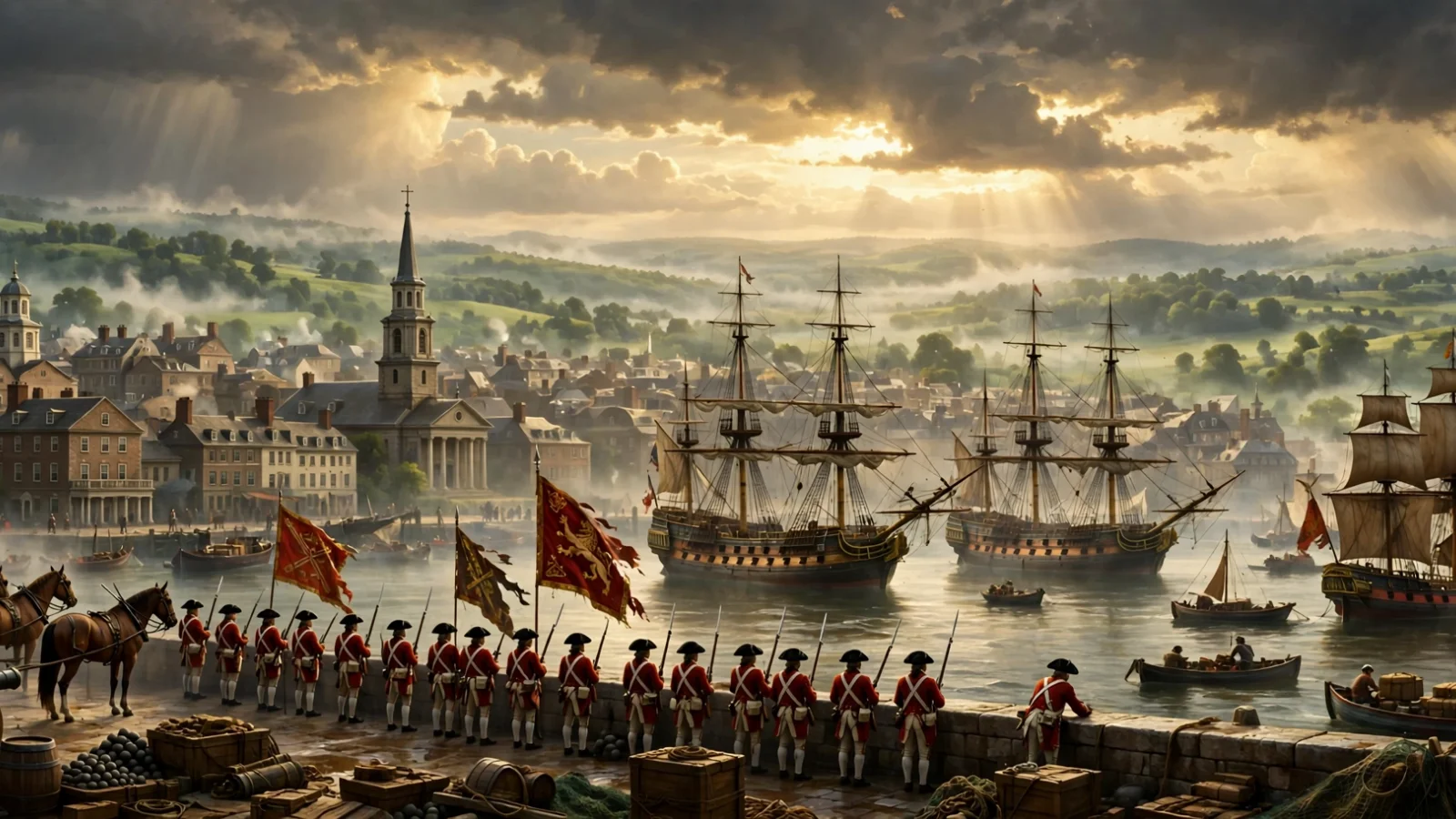
A fast packet makes Halifax in three weeks, and her news sets London by the ears: at Philadelphia, on the fourth of July, the rebel Congress has declared the thirteen colonies free and independent states. Not a single foreign power recognizes them — not yet.
At New York, General Howe masses the greatest fleet and army Britain has ever sent across an ocean: redcoats, Hessians hired from the German princes, and ships of the line without number. Washington's ragged Continentals dig in on Brooklyn Heights and wait. In Boston the King's men hold their ground; along the frontier, the Haudenosaunee, the Cherokee, and the Shawnee weigh whose promises to trust — and what a broken promise costs.
Across the water, the courts of Versailles and Madrid read the dispatches by candlelight and smile their thin smiles. France's ministers count Britain's debts and wonder whether this rebellion is the lever to undo the humiliation of 1763. In St. Petersburg, Catherine measures Poland's corpse; in Vienna, Maria Theresa holds her sprawling inheritance together with failing hands. Parliament votes the money, and the King will hear no talk of conciliation.
It is July 1776, and the world holds its breath. Choose your nation — a great power, a minor state, a company with an army, or a people the maps barely name — take your seat at the council table, and decide what this age of upheaval shall become.
Beyond the dispatches, the wider world stirs: in the Caribbean, sugar fleets weigh anchor under guard; on the Indian coast, the Company's factors count their rupees and their enemies; and along the great rivers of the interior, peoples whose names never reach London decide whether this quarrel of kings is their war at all. The powder is dry. The match is in your hand.